
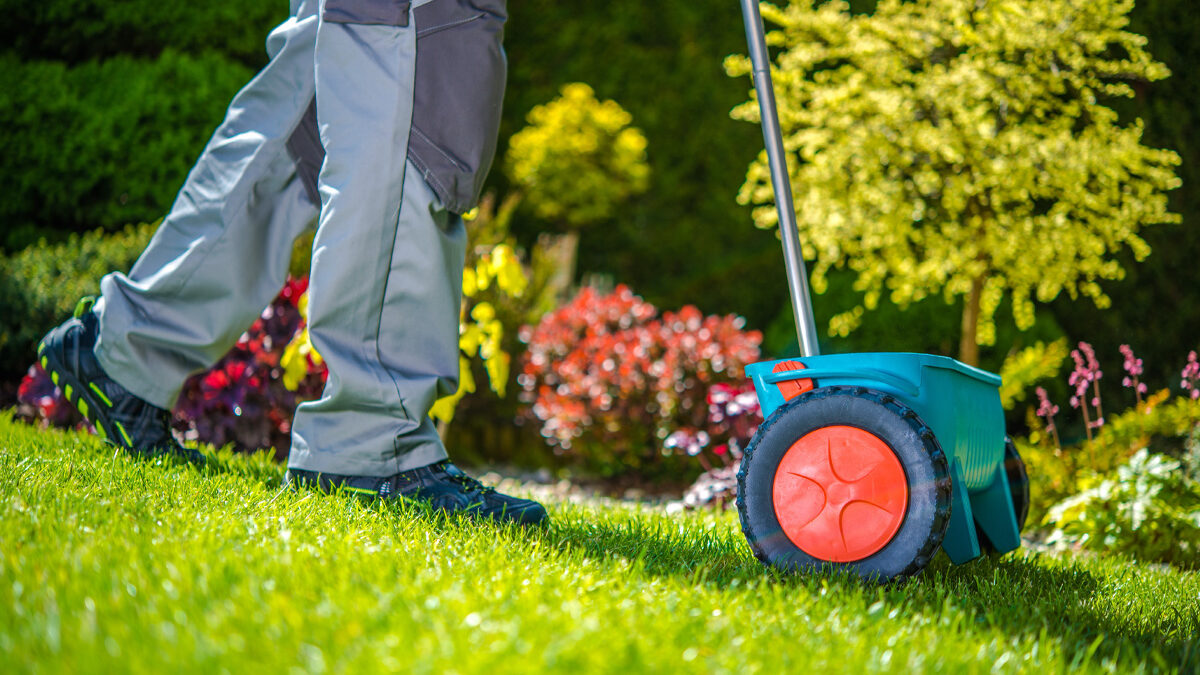
Is your lawn looking a little thin, yellow, or overrun with weeds after another unpredictable Kansas season? You’re not alone. Proper fertilization at the right time is the single most effective thing you can do to achieve a healthy, resilient lawn. It’s about feeding your grass what it needs, exactly when it needs it. As Wichita’s local lawn care experts, we at Elite Landscape Solutions understand our region’s specific soil, grass types, and weather patterns. We’ve crafted this definitive guide to help you determine when to fertilize your lawn and provide you with the perfect schedule for a thriving Wichita lawn.
Why You Shouldn’t Skip Fertilizing in Wichita
Think of fertilizer as a balanced diet for your lawn. Grass, like any living thing, requires essential nutrients to grow strong and healthy. While your soil provides some of these, it’s often not enough to sustain a dense, vibrant lawn. This is especially true here in Kansas, where our often clay-heavy soil can make it difficult for grass roots to access nutrients.
Proper fertilization:
- Provides Essential Nutrients: Primarily Nitrogen (N), Phosphorus (P), and Potassium (K), which promote vibrant green color, strong root development, and overall resilience.
- Promotes Deep Root Growth: A well-fed lawn develops a robust root system that is better equipped to find water during droughts and survive our extreme temperature swings.
- Chokes Out Weeds: A thick, healthy lawn is the best defense against weeds. When grass grows densely, there is simply no room for crabgrass, dandelions, and other invaders to take hold.
- Helps Recover from Stress: Fertilization helps your lawn bounce back from the stress of foot traffic, pests, disease, and extreme weather.
Know Your Grass: Cool-Season vs. Warm-Season Lawns
Before you can create a fertilization schedule, you must identify your grass type. The timing depends entirely on whether you have a cool-season or warm-season lawn, as their primary growth cycles are opposites.
Cool-Season Grasses (Most Common in Wichita)
The vast majority of lawns in the Wichita area are cool-season grasses. These include Tall Fescue, Kentucky Bluegrass, and Ryegrass. As their name suggests, they thrive in the cooler temperatures of the spring and fall. These are their main growth periods, and it’s when they are most receptive to fertilizing. They tend to slow down and can go dormant during the peak heat of summer.
Warm-Season Grasses
While less common in our area, you will still find warm-season lawns like Bermuda grass and Zoysia grass. These grasses love the heat and have their most active growth period during the hot summer months. They go completely dormant and turn brown after the first hard frost in the fall, greening up again late in the spring.
Wichita Lawn Fertilization Calendar
This is the core of your lawn care strategy. Timing is everything. Applying the right product at the wrong time can be ineffective or even damage your lawn. Follow this seasonal guide for optimal results.
Early Spring (March – April)
As your lawn wakes up from winter, the primary goal is to prevent weeds and give it a gentle nudge.
- Focus: The most critical application of the spring is a pre-emergent herbicide to prevent crabgrass. This creates a barrier that stops crabgrass seeds from germinating.
- Pro-Tip: Timing is key. Apply your pre-emergent fertilizer when soil temperatures consistently reach 55°F. For Wichita, this is typically in March or early April. This is also a great time to apply pre-emergent and pos-emergent herbicides to prevent weeds during the summer and late spring.
Late Spring (May – June)
This is a key growth period for both grass types and the time to feed your lawn for the stressful summer ahead.
- Focus: Apply a higher-nitrogen fertilizer to fuel rapid growth and build density. This application helps the lawn thicken up, which is crucial for choking out broadleaf weeds like dandelions.
- Pro-Tip: If possible, apply fertilizer just before a day of light, gentle rain. This allows the rain to naturally water the product into the soil. Avoid applying before a heavy thunderstorm, which can cause the fertilizer to wash away.
Summer (July – August)
Wichita summers can be brutal. Your fertilization strategy needs to adapt to the heat.
- Focus for Cool-Season Lawns (Fescue): AVOID heavy nitrogen fertilization during peak heat. This can encourage weak growth that is susceptible to disease and burn the lawn. If you must fertilize, use a very light, slow-release product.
- Focus for Warm-Season Lawns (Bermuda/Zoysia): This is their prime time! These grasses thrive in the heat and will benefit from a steady supply of nitrogen to maintain their color and density.
- Pro-Tip: Water your lawn deeply but infrequently in the early morning hours. This encourages deep root growth and minimizes water loss to evaporation.
Early Fall (September – October)
According to the Kansas State Extension Office, September is the best time of the year to fertilize cool season lawns. Fertilizing in the fall allows your grass to stay greener and healthier longer.
- Focus: This feeding helps repair summer damage, promotes vigorous root and shoot growth, and develops energy reserves for a healthier, quicker green-up next spring. This application should be rich in nitrogen.
- Pro-Tip: Don’t skip this feeding! Even if your lawn looks good, the work it does underground during the fall is what sets the stage for success the following year.
Late Fall / Winterizer (November – Early December)
The final step before winter sets in provides a long-term boost for your lawn’s root system.
- Focus: A “winterizer” fertilizer is applied as the grass begins to shut down for the year. While top growth has stopped, the roots continue to grow until the ground freezes. This application provides nutrients that promote deep root development throughout the winter.
- Pro-Tip: Apply this final feeding after your last mow of the season but before the ground freezes solid.
Choosing the Right Fertilizer
Walking down the fertilizer aisle can be overwhelming. The three numbers on the bag (e.g., 10-10-10 or 24-0-6) represent the percentage of N-P-K:
- N (Nitrogen): Promotes rapid green, leafy growth.
- P (Phosphorus): Stimulates root development.
- K (Potassium): Boosts overall plant health and resilience to stress.
For the best results, a soil test is the only way to know exactly what your lawn is missing. This takes the guesswork out and helps you apply only what is needed, which is both cost-effective and environmentally responsible.
Don’t Make These Common Fertilizing Mistakes!
Getting the timing or application wrong can do more harm than good. Avoid these common pitfalls:
- Fertilizing at the wrong time: Applying heavy nitrogen to fescue in July.
- Using too much or too little: Over-application can burn your lawn and cause runoff, while under-application yields poor results. As a good rule of thumb, Michigan State University recommends using one pound of nitrogen per 1,000 square feet.
- Applying unevenly: This leads to a patchy, streaky lawn with light and dark green spots.
- Forgetting to water it in: Most granular fertilizers need to be watered in to move the nutrients from the surface into the root zone and prevent leaf burn.
Frequently Asked Questions (FAQ)
Should I fertilize my lawn before or after it rains in Wichita?
Applying fertilizer before a light, gentle rain is ideal, as it helps wash the nutrients into the soil. However, avoid applying before a heavy downpour, which can wash the product away.
How often should I fertilize my lawn in Kansas?
Generally, a well-maintained lawn in our area benefits from 4 to 6 fertilizer applications per year, timed according to the seasonal calendar outlined above.
What is the best lawn fertilizer for fescue grass in Wichita?
Fescue grass thrives on fertilizers that are high in nitrogen (the first number on the bag), especially for fall applications. The exact blend, however, depends on your soil’s health. For more information on fall lawn care, check out our article, “Fall Lawn Care Checklist & Expert Tips.”
Is professional lawn fertilization in Wichita worth it?
For many homeowners, yes. When you factor in the cost of purchasing multiple products, a spreader, and the value of your time, professional services are very competitive. More importantly, you eliminate the risk of costly mistakes and benefit from the superior results achieved with professional-grade products and expert timing.
Leave it to the Pros: Your Wichita Lawn Care Experts
A beautiful, healthy lawn is an extension of your home. By understanding your grass type and following a strategic, season-by-season fertilization plan, you can provide the foundation for a lawn that thrives in Wichita’s unique climate.
Remember that for our common fescue lawns, the fall feeding is the most crucial investment you can make for year-long success. If you’re ready for a guaranteed beautiful lawn without the guesswork, trust the local experts at Elite Landscape Solutions to deliver the professional results you deserve. Contact us today for a free estimate on fertilization